
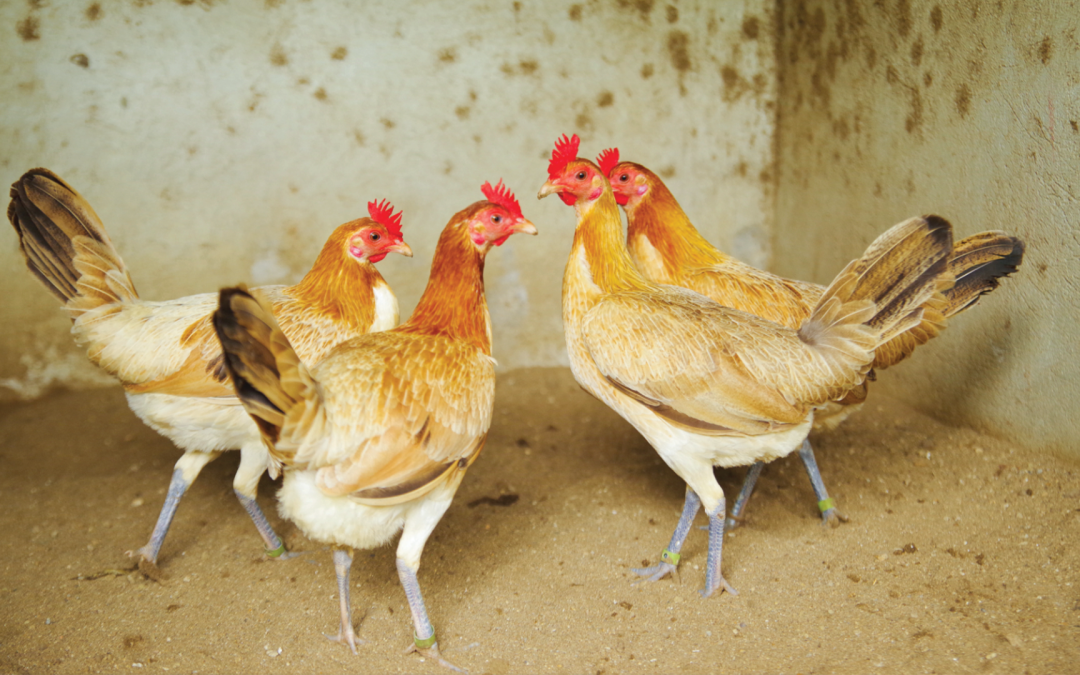
The Best Feed For Breeding
Proper pullet management is vital for the long-term success of your gamefowl breeding business because it is directly related to the quality of eggs produced. The pullet develops reserves in its body for future laying during its developmental stage; thus, good management during this time determines optimal egg and chick production.
Growth Stage
Pullet preparation starts at day one by ensuring that the chicks have ready access to high-quality feeds and water, promoting early growth and development. Reducing stress during the first month of the chick’s life positively impacts feed digestion and nutrient absorption. Early feeding enhances small intestine development. A sufficient quantity of feeders and waterers ensures flock uniformity, and adequate living space promotes social development, decreases pecking, and increases the comfort and performance of the pullets.
Ideal breeding for pullets starts at 8 months old. But, as a breeder, it is still essential to monitor your broodstock’s developmental phases. Week 6 to 12 is the period of rapid growth where the pullet builds her structural organs like feathers, bones, and muscles. Growth begins to slow down at Weeks 12 to 18, while the reproductive tract matures in preparation for egg production. At this stage, muscles and fat continue to develop as it reaches sexual maturity.
Routine visual check is necessary because weight and body composition determine the sexual maturity of a pullet rather than specific calendar age. The ideal weight at Week 12 is 800 to 900 grams per bird. The optimal body weight of the pullet depends on the breed but it mostly ranges from 1.35 to 1.65 kgs at the start of egg production. By providing the right feeds and environment during the growing stage, breeders can reach a minimum of 85% uniformity of pullets before point of lay at 18 weeks.
Best Feeds
Gallimax 21 Chicken Pre-Lay is designed to prime the pullets’ fleshing and reproductive development for optimum egg size, reproductive longevity, and better chick quality. With optimum levels of selenium yeast, inactive yeast, balanced proteins, and organic minerals, it boosts the pullet’s fertility and ensures uncompromised egg size and ideal hatchability.
Gallimax 21 Chicken Pre-Lay is ideal for pullets with an age range of 4 to 8 months. It also has a calcium level of 1.5% to 2.20%, which helps prepare the pullet’s reproductive tract for breeding.
Once the eggs hatch, it is essential to provide the correct temperature, lighting, and humidity during the chick’s brooding stage to minimize mortality. They still cannot regulate their body temperature; thus, their environment must be monitored and adjusted. The chicks should have access to clean water and high-quality feeds in the first 48 hours.
Salto Baby Stag Developer contains the ideal amount of VITAMIN B-COMPLEX to combat the stress of the transition from brooding to ranging. It also contains a coccidia inhibitor to protect the chicks from coccidiosis during ranging. Additionally, Salto Baby Stag Developer has ImmunoDigest properties to ensure a healthier gut for full absorption of essential nutrients and a more robust immune system for protection against diseases.
For gamefowl breeders, knowing the stages of development of pullets and stags will help identify the proper management practices for implementation. Salto’s Gamefowl Specialists, with their hands-on experience and extensive technical knowledge, are always ready to support the breeders in ensuring they are in the right direction.
Frequently Asked Questions
At what age should pullets be prepared for breeding, and what developmental milestones should breeders watch for?
Ideal breeding for pullets starts at 8 months old. However, breeders should monitor key growth phases: weeks 6–12 involve rapid structural development (feathers, bones, muscles), while weeks 12–18 see slowing growth as the reproductive tract matures. Body weight is a more reliable indicator of sexual maturity than calendar age, with optimal pre-lay weight ranging from 1.35 to 1.65 kg depending on the breed.
Why is flock uniformity important during the pullet growing stage, and how is it achieved?
Flock uniformity ensures that pullets reach point of lay at roughly the same time, maximizing production efficiency. It is achieved by providing adequate feeders, waterers, and living space from day one. Sufficient space reduces pecking and stress, supporting consistent feed intake and development. Proper early-stage management can help breeders achieve a minimum of 85% flock uniformity by 18 weeks.
What makes Gallimax 21 Chicken Pre-Lay the recommended feed for pullets approaching the breeding stage?
Gallimax 21 Chicken Pre-Lay is specially formulated to support fleshing and reproductive development in pullets aged 4 to 8 months. It contains selenium yeast, inactive yeast, balanced proteins, and organic minerals that enhance fertility, egg size, and hatchability. Its calcium content of 1.5% to 2.20% helps condition the pullet’s reproductive tract, making it the go-to feed for breeders aiming for consistent, high-quality egg production.
How does Salto Baby Stag Developer protect newly hatched chicks during the brooding-to-ranging transition?
Salto Baby Stag Developer addresses the stress chicks experience when moving from brooding to ranging. It is fortified with Vitamin B-Complex to combat transition stress, a coccidia inhibitor to guard against coccidiosis during ranging, and ImmunoDigest properties that promote gut health, enhance nutrient absorption, and strengthen the immune system — helping young birds survive and thrive during one of their most vulnerable developmental phases.
What environmental and nutritional conditions are critical for newly hatched chicks in their first 48 hours?
Newly hatched chicks cannot regulate their own body temperature, making controlled brooding conditions essential. Breeders must maintain proper temperature, lighting, and humidity levels to minimize early mortality. Within the first 48 hours, chicks must have uninterrupted access to clean water and high-quality feeds. These early conditions directly influence gut development, nutrient absorption, and long-term growth performance throughout the bird’s life.
References:
Salto Products. Retrieved September 27, 2021 from https://www.salto.com.ph/products/
Pullet Scheduling and Management. September 17, 2020. Salto Usapang Pagmamanok. Retrieved September 27, 2021 from https://www.salto.com.ph/pullet-scheduling-management/
Good Management Practices of Pullets Rearing in Commercial Layer Farms. July 24, 2019. Retrieved September 28, 20201 from https://www.pashudhanpraharee.com/good-management-practices-of-pullets-rearing-in-commercial-layer-farms/
Perfecting Pullet Management. March 11, 2019. Fertrell Blog. Retrieved September 27, 2021 from https://www.fertrell.com/blog/perfecting-pullet-management
Importance of Pullet Feeding Programs in Ensuring a Profitable Laying Flock. January 1, 2008. The Poultry Site. Retrieved September 27, 2021 from https://www.thepoultrysite.com/articles/importance-of-pullet-feeding-programs-in-ensuring-a-profitable-laying-flock
Recent Comments